
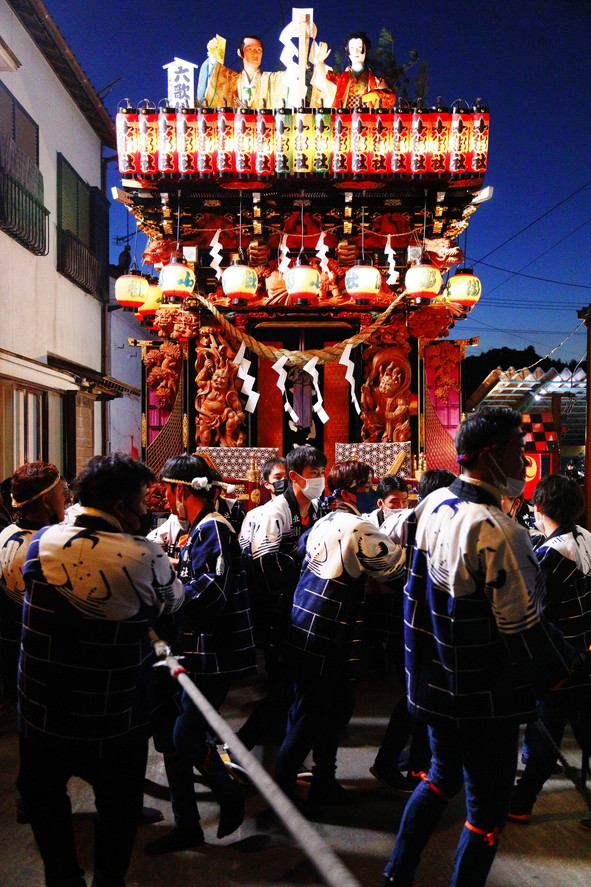
This Week's Festival FloatMorimachi, Shinmachi1992 (Heisei 4)
Morimachi Float: Shinmachi, Hokugaisha
Wednesday, September 24, 2025
It was named "Hokugaisha" because it was located at the northernmost point of Morimachi village. A distinctive feature is the railing in front of the blind, which opens at the front like a gate; during "Maigo-gaeshi," the climax of the festival, the sight of the maigo (child dancer) riding in it is especially striking.
• Joinery by Uchiyama Tategu-ten (Shinmachi)
• The first float was made in the late Edo period. In 1863 (Bunkyu 3), a fight between the young men of Honmachi and Shimojuku at the Mishima Shrine festival grew into a lawsuit at the magistrate's office and a disturbance across the town, so the float parade was cancelled and Shinmachi's float was sold to Datekata, Kakegawa City
• The second float was made between 1887 and 1907 (Meiji 20–40) and sold to Kumagiri, Haruno-cho in the spring of 1930 (Showa 5)
• The third had a well-balanced form and became the model for many later floats. It was sold to Iida, Morimachi (Wakamiya housing area); the current float is the fourth
Builder: Shokichi Okano (Shinmachi), Rokuro Okano (Shinmachi), Shimpei Naito (Shinmachi), and others
Carving: Risaburo Hayase (first-generation Asaun, then living in Kakegawa)
Painting: Sadasuke Muramatsu (Kawaramachi)
Wheels: Kenjiro Morita (Kawaramachi)
Related Tags
#Morimachi, Shinmachi#Festival floats#Hokugaisha
Stories Carved into Festival Floats
Explore this float in depth
Each carving, the origin of the float's name, and the records of its builders and carvers are on our sister site, "Stories Carved into Festival Floats".
View on the sister site (Japanese)